ADHD-Friendly Home Organization: Systems That Work for Your Brain

At Organize to Live, we believe an organized home should make everyday life easier—not give you another set of rules to follow. We work with individuals and families throughout Raleigh, Cary, Durham, and the surrounding Triangle who want their homes to feel calmer and function better, including clients who identify as neurodivergent or have ADHD.
If you've ever organized a space, felt great about it for a week, and then watched the clutter creep back in, you're not alone. Maybe the bins are too complicated, the storage is hard to access, or the system requires more time and attention than your daily routine allows. Sometimes, the problem isn't that you haven't tried hard enough. It's that the system wasn't designed for you.
Organizing with ADHD in mind means looking beyond appearances and focusing on what makes a space easier to use, maintain, and live in.
No Two Brains Organize the Same Way
It can be easy for a non-ADHD helper, spouse, parent, or friend to feel frustrated by the recurring clutter and difficulty keeping systems going. We get it. Clutter that keeps returning, projects that stall halfway, systems that fall apart within a week can be exhausting for everyone involved.
But here's the truth: no two brains are alike, and the ADHD brain has some real, unique factors at play. Some of those factors are genuine superpowers - creativity, hyper-focus, quick thinking, out-of-the-box problem solving. Others simply require more delicate, intentional attention when it comes to organizing a home or workspace.
Adults with ADHD commonly experience disorganization, forgetfulness, and difficulty with planning, task completion, and time management as core features of the condition, not as a character flaw or a lack of trying. And it's more common than many people realize: an estimated 15.5 million adults, or 6.0% of the U.S. adult population, currently carry an ADHD diagnosis (CDC / CHADD, 2024). Disorganization is often one of the most visible - and most painful - parts of that experience. Difficulties with planning, organization, and task completion can make everyday routines more challenging for adults with ADHD.
So if you or someone you love has struggled to "just get organized" using systems built for a neurotypical brain, please hear this: it's not a willpower problem. It's a fit problem. And it's fixable.
One Client’s Success Story:
“Samantha” was a high-performing woman who travels frequently for work. Between her busy lifestyle and her ADHD, her home had gotten out of control. Clothes were piled high on the floor. The pantry was full of expired food and duplicates. The bathroom cabinets were overflowing. Finding what she needed was frustrating, and the prospect of working through it herself was paralyzing. An acquaintance recommended she hire us.
We spend three days (over the course of a few months) bringing calm and clarity to her home and her head. We helped her declutter, giving her permission to donate items she no longer was using. We disposed of expired foods and donated unnecessary duplicates. And, in each area, we organized the remaining belongings into clear zones - making sure it was clear where things belonged.
The real success story is that she has been able to maintain the systems, because they were clear.
Four Ways We Approach Organizing with ADHD
Without diving too deep into the science, here are a few of the principles we lean on when supporting clients with ADHD in the picture.
1. If you can't see it, it doesn't exist
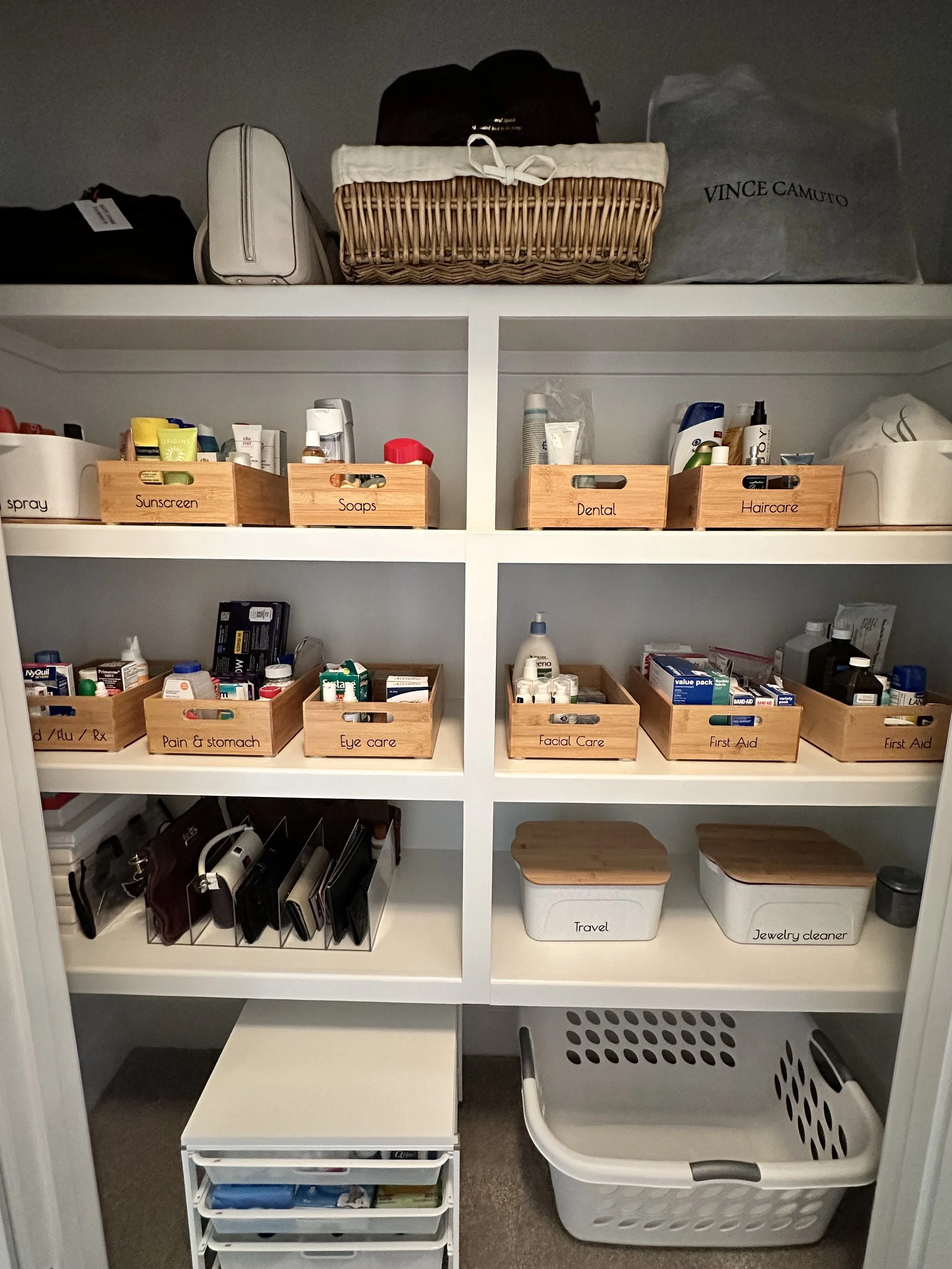
For many ADHD brains, "out of sight" truly does mean "out of mind." Closed bins, opaque drawers, and back-of-the-closet storage are where good intentions go to disappear. This makes decluttering first absolutely essential. Then you can implement well-labeled containers. When everything is easy to identify at a glance, the odds of it actually getting used (and put back) go way up.
2. The more you own, the harder it is to manage
Inventory management gets exponentially harder as inventory grows. This is true for retail warehouses, and it's true for homes. Reducing the sheer volume of items in a space doesn't just create more room; it makes the things you actually use and love more visible and more accessible. Less "stuff to manage" means less cognitive load, and less cognitive load means a system that's far more likely to stick.
3. Small changes, one habit at a time
It's tempting to imagine a weekend blitz: pack up the whole house, purge everything, done. But sweeping overhauls rarely hold. The work can't be maintained if it hasn't addressed the root habits underneath the clutter. Instead, we focus on making small, sustainable changes and building one new habit at a time before moving to the next area. The goal is progress you can maintain.
4. Your home doesn’t have to look like a magazine to work well.
Every brain works differently, and the systems that help someone function well will look different from one household to the next. A home doesn't need to look like a magazine spread to be organized and working for the people who live in it. There are so many individual factors to consider - sensory preferences, energy levels, routines, family dynamics - that a truly effective system is always a custom one. One size does not fit all.
Resources We Recommend
We're always learning alongside our clients, and a few voices in the organizing world have shaped how we think about working with different brains and different needs:
Cassandra "Cas" Aarssen of Clutterbug. Her quiz helps identify your natural organizing style, along with practical suggestions tailored to that style.
Dana K. White of A Slob Comes Clean. Her decluttering method offers a clear, step-by-step way to work through "too much stuff" without getting stuck.
Both have podcasts that are genuinely enjoyable to listen to, and both bring a compassionate, no-shame approach to organizing that we deeply appreciate. There are also several excellent books specifically about organizing with ADHD - beyond the practical tips, they can help you feel like you're not alone, and not "crazy," in this journey. Organizing Solutions for People with ADHD is a good start.
Why Professional Support Makes a Difference
In our own experience working with ADHD clients, we help clients create systems that are easier to use and maintain. It's the difference between a system you have to fight to maintain and one that works quietly in the background of your life. We can’t treat or resolve those ADHD-related difficulties, but we can help support you in your daily home life.

If disorganization has felt like a source of shame, frustration, or exhaustion for you or someone you love, please know: it's not about trying harder. It's about finding the right system — and you don't have to figure it out alone.
We would be honored to schedule a one hour consultation with you to see how we can help.
Organize to Live provides compassionate, experienced professional organizing services to the Raleigh/Durham area. Contact us to schedule your consultation.